

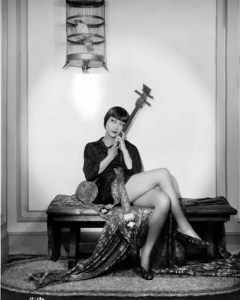

E.A. Dupont’s late silent feature is of enduring interest for the star treatment it gives Anna May Wong. The Chinese-American performer, a mesmerising screen personality, was not often used to her best advantage in Hollywood. Like Paul Robeson, Wong came to Europe because greater opportunities were afforded non-white performers in non-American film industries. Sabu was a star in 1930s British films, too. However, those opportunities still had limits. This is one of many, many films in which (as the cultural commentator Anna Chen pointed out) Anna May Wong Must Die … in order that her disruptive presence be exorcised so white people can get on with drab, dreary lives without her.


A talking prologue, thuddingly shot and dully enunciated, takes some of the edge off by indicating that club owner Valentine Wilmot (Jameson Thomas) has become a burned-out shell, running a quiet country pub, since the events of Piccadilly. After this lump of stodge, the film proper begins with the dazzling display of Piccadilly Circus and credits written on the sides of buses … before moving from real streets to an Alfred Junge set which wouldn’t be bettered until The Shanghai Gesture (1941). Titles faff about what kind of establishment the film revolves around (‘it’s called a club’) but it’s a restaurant with a floorshow. The star attractions are dance whizz Vic Smiles (Cyrill Ritchard), who draws a huge female crowd, and less sparkly partner Mabel (Gilda Gray), who’s the manager’s girlfriend and evidently flagging as a performer. Gray, a genuine jazz age dance sensation known for popularising ‘the shimmy’, but we see little of her footwork; it’s hard to convey being good but not great and Mabel isn’t at a stage when she could be drunk and stumble or otherwise foul up.
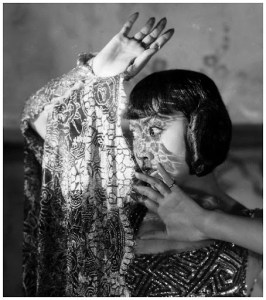

A complaint from a glutton (an early, funny Charles Laughton bit) about a grubby plate leads Valentine to the scullery (Dupont loves tracking shots through crowded venues to show struggling workers backstage or in kitchens) where Shosho (Wong) imitates Mabel’s moves to an audience so appreciative they aren’t washing up properly. Val fires the girl, who has laddered stockings and admits the one time she danced in public in Limehouse there was trouble (‘knives, police’). In a scene we crucially don’t see (which may have been cut at some point), Valentine is persuaded to take Shosho on as a dancer when Vic quits. Shosho insists on an ‘authentic’ Chinese costume (which looks like something Princess Aura would wear on Mongo) provided by her Limehouse boyfriend/accompanist Jim (King Ko Chang). It seems likely she becomes a sensation for her slinky appearance and sex appeal rather than actual skill on the floor. Shosho vamps her way up the showbiz ladder, memorably shutting the door on Jim with her back as she makes up to her boss. This puts Mabel on the outs romantically as well as professionally. As written, Shosho is a vamp who gets above herself and therefore deserves to die … but Wong’s natural charisma and subtle expressiveness, plus the way contemporary viewers invest in her, make for a more complex, innately appealing character.


Among the uncredited cast – Jack Raine, John Longden, Ellen Pollock (‘Aunt Harris’ in Horror Hospital, 1974), Ray Milland.
The BluRay version has a great Neil Brand score.